 Made In USA

CNC Milling / Turning
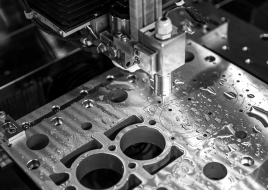
CNC machines work by rotating the raw material, which could be (round barstock, hex barstock, tubing, a casting, a forging, a slug, etc.)
Your browser is out of date.
You are currently using Internet Explorer 7/8/9, which is not supported by our site. For the best experience, please use one of the latest browsers.
Hydromat machines are a type of rotary transfer machine that utilizes both hydraulically driven and CNC driven motors. The Hydromat Rotary Transfer Machine is a modular system consisting of horizontal and vertical tool spindles rigidly mounted around a precision cast iron ring.This rotary transfer precision machining configuration provides a lot of versatility and many efficiencies.
Bar stock is loaded into the machine and the first operation is to cut the part to length. (If bar stock material is not being used, a slug of raw material, a raw casting, a forging or an extrusion can also be robotically loaded into the Hydromat to be machined.) The raw material is loaded into a collet. The collet system is then used to index the part around the various machining stations.
We offer Hydromat Machining Services that include both 12 and 16 station Hydromats. The 12 or 16 different stations divide the amount of work that is required to be completed among each available station. (For example): The different operations of turning, drilling, reaming, boring, threading as well as milling can be broken up into separate stations.) The rotary transfer system is similar to the concept of Multi-spindle machines. By dividing up the work that is required to be done into multiple machining stations, the total cycle time of the finished part is significantly reduced. Whichever operation of the 12 or 16 stations takes the longest, is what determines the cycle time of the machine. Hence, if the longest cycle time is 9 seconds then the machine is going to rotate every 9 seconds. As a result, a completed part will be dropped off the machine every 9 seconds.
This arrangement provides tremendous versatility and flexibility in a turnkey precision machining system while in most instances eliminating the need for costly secondary operations. Hydromats are designed for very long-running jobs due to their fast cycle times and consistent capabilities. The setups on these machines can take anywhere from a day up to a week or more depending on the specific part. As a result of the significant setup requirements required for the Hydromat, the normal (EAU) for parts is between 100,000 pieces to several million pieces. We can run families of similar parts on these machines but in general, you will want at least to have 100,000 pieces to make the setup cost-effective.
| Machine Capacities | 12 & 16 station Hydromat machines. We also have over 200 pieces of CNC turning/milling & CNC Swiss machines. |
| Raw Materials | Steel, Stainless steel, Aluminum, Brass, Bronze, plastics, extrusions as well as tubing and practically any raw material. |
| Industries Served | Automotive, Aerospace, Dental, Hand tools, Medical, Appliance, HVAC, Switches & Connectors as well as others. |
| Common Applications | Almost anything. Hydraulic components, water fittings, valve stems, air brake components, bleed screws, pump components, threaded bushings and many others. |
| Turnkey Line Ready Parts | We have decades of experience taking responsibility for delivering line-ready components as well as assemblies with a combination of over 100 sub-components/operations required. |
| JIT Delivery | Our facility has decades of experience managing orders, purchasing raw materials & delivering via JIT. |
| Quality | ISO 9001:2015 Certified & AS9100 Certified. |


Common Applications of Hydromat machines include almost anything:

Commonly used materials include:
Hydromat machines are a type of rotary transfer machine that utilizes both hydraulically driven and CNC driven motors. The Hydromat Rotary Transfer Machine is a modular system consisting of horizontal and vertical tool spindles rigidly mounted around a precision cast iron ring. (Hence the name Rotary Transfer machine.) This rotary configuration provides a lot of versatility and many efficiencies.
Bar stock is loaded into the machine and the first operation is to cut the part to length. (If bar stock material is not being used, a slug of raw material, a raw casting, a forging or an extrusion can also be robotically loaded into the Hydromat to be machined.) The raw material is loaded into a collet. The collet system is then used to index the part around the various machining stations.
Our machining facility has both 12 and 16 station Hydromats. The 12 or 16 different stations divide the amount of work that is required to be completed among each available station. (For example): The different operations of turning, drilling, reaming, boring, threading as well as milling can be broken up into separate stations.) The rotary transfer system is similar to the concept of Multi-spindle machines. By dividing up the work that is required to be done into multiple machining stations, the total cycle time of the finished part is significantly reduced. Whichever operation of the 12 or 16 stations takes the longest, is what determines the cycle time of the machine. Hence, if the longest cycle time is 9 seconds then the machine is going to rotate every 9 seconds. As a result, a completed part will be dropping off the machine every 9 seconds.
This arrangement provides tremendous versatility and flexibility in a turnkey precision machining system while in most instances eliminating the need for costly secondary operations. Hydromats are designed for very long-running jobs due to their fast cycle times and consistent capabilities. The setups on these machines can take anywhere from a day up to a week or more depending on the specific part. As a result of the significant setup requirements required for the Hydromat, the normal (EAU) for parts is between 100,000 pieces to several million pieces. We can run families of similar parts on these machines but in general, you will want at least have 100,000 pieces to make the setup cost-effective.
Our machining facility has both 12 and 16 station Hydromats. The 12 or 16 different stations divide the amount of work that is required to be completed among each available station. (For example): The different operations of turning, drilling, reaming, boring, threading as well as milling can be broken up into separate stations.) By dividing up the work that is required to be done into multiple machining stations, the total cycle time of the finished part is significantly reduced. Whichever operation of the 12 or 16 stations takes the longest, is what determines the cycle time of the machine. Hence, if the longest cycle time is 9 seconds then the machine is going to rotate every 9 seconds. As a result, a completed part will be dropping off the machine every 9 seconds.
This arrangement provides tremendous versatility and flexibility in a turnkey precision machining system while in most instances eliminating the need for costly secondary operations. Hydromats are designed for very long-running jobs due to their fast cycle times and consistent capabilities. The setups on these machines can take anywhere from a day up to a week or more depending on the specific part. As a result of the significant setup requirements required for the Hydromat, the normal (EAU) for parts is between 100,000 pieces to several million pieces. We can run families of similar parts on these machines but in general, you will want to have at least 100,000 pieces to make the setup cost-effective.
CNC machines work by rotating the raw material, which could be (round barstock, hex barstock, tubing, a casting, a forging, a slug, etc.)
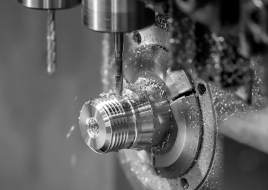
The concept of the Swiss machine is that the raw material bar itself moves towards the cutting tool that is doing the work rather than the tool traveling to the bar.
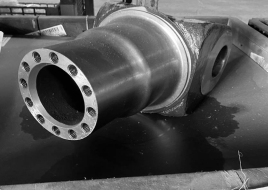
We have two seperate machining facilities focused on machined Castings, Forgings and large diameter bar stock components.

Fill out the form and a Component & Device Sales, Inc. representative will contact you shortly
