 Made In USA


Progressive Die & Metal
Our Progressive Die, Deep Draw and Compound stamper has been in business for over 85 years. They have NO DEBT and they have invested heavily in SERVO driven stamping presses. This allows us to be extremely competitive…
Your browser is out of date.
You are currently using Internet Explorer 7/8/9, which is not supported by our site. For the best experience, please use one of the latest browsers.

We help small, medium, and large OEM’s in determining the most efficient four-slide or multislide production metal stamping available to produce their required components.
Depending on the size of the part as well as the part complexity, four-slide & multi-slide machines can often produce parts for a lower total cost than progressive dies. When using a slide press, much of the forming occurs outside the die, with actions independent of the press station. In a progressive die, all the forming actions are directly linked together and must occur inside the die.
Tool motions in a slide machine are independent of timing and direction from each other. As a result, changes in slide stamping machines can be made by making relatively simple adjustments to each sliding tool individually. This allows for adjustments to stroke, shape, and timing of each tool to compensate for dimensional variation, tool wear or changes in material properties and thickness. The end result is that tool adjustment and maintenance are easier on a slide press due to greater accessibility and visibility of the tools in the forming and press areas.
Commonly used materials include:
Common Applications of Four-Slide and Multi-Slide Stampings:
Round parts are especially advantageous & efficiently produced using four-slide & multi-slide presses.


Slide stamping presses are another type of machine that can be used to stamp and form metal as well as wire components. The slit-to-size material is generally fed vertically vs a progressive die where the coiled material is fed horizontally. Slide presses allow many of the operations to be completed outside the tooling by hard tooling that is built into the slide machines themselves. This results in tooling dollars often being less than $20,000 and generally less than half the cost of a progressive die.
In addition, Four-slide and Multi-slide presses are also very efficient. They use less electricity than a verticle stamping press, generate less material waste because they start with near-net width material, and do not need carrier strips. That being said they can also produce huge quantities of production parts per day at competitive prices.
Fourslide & Multi slide tooling cost is normally under $20,000. Even though the tooling can be less expensive, they can still provide competitive piece part costs.
The Fourslide, as well as Multislide presses, allow our manufacturing facility to manufacture complex components that in some cases cannot be manufactured with a progressive tool. Material grain direction is a huge advantage. Many parts have a specified grain direction that makes slide machines the most efficient manufacturing option.
Conventional verticle stamping presses are only capable of pressing sheet metal in a single vertical direction, which can limit the types of shapes that can be formed. Sharp bends, in particular, cannot be achieved using verticle presses without using additional costly automation. On the other hand, slide stamping machines can manipulate the workpiece from 4 axes. This added versatility means that multi-sliding can handle bends greater than 90 degrees.
Cost Efficiency
There are many cost-effective reasons to consider a slide machine versus a more traditional stamping press. In many cases, material usage can be significantly reduced by manufacturing parts with a slide machine versus a press die. When using a punch press or progressive die, the material is needed on either side of the strip in order to carry the part as it progresses through the die. However, with slide machines, the material can be purchased slit to the exact width required to produce each part. The reduced material width results in the less raw material are required, resulting in a lower piece part cost.
When using slide presses, the forming often occurs outside the die, with actions independent of the press station. In a progressive die, the forming actions are directly linked together and all must occur inside the die. Tool motions in a slide machine are independent of timing and direction from each other. This allows for adjustments to the stroke, shape, and timing of each tool to compensate for dimensional variation, tool wear, or changes in material properties and thickness. This results in tool adjustment and maintenance is much easier, due to greater accessibility and visibility of the tools in the forming and press areas.
If design changes are required for a part after the tooling has been built, changes are much easier to be made to a slide tool than a progressive die tool. Since there are various motions provided by the die head on slide presses such as forming slides, vertical stripper mechanisms, and a range of auxiliary units on the machines themselves that can be adjusted. If the same part had been tooled in a progressive die the tooling could require massive tooling dollars to make similar changes.
In addition, Four-slide and Multi-slide machines are also very efficient. They use less electricity than a verticle stamping press, generate less material waste because they start with a near-net width material, and do not need carrier strips. That being said they can also produce huge quantities of production parts per day at competitive prices.


Our Progressive Die, Deep Draw and Compound stamper has been in business for over 85 years. They have NO DEBT and they have invested heavily in SERVO driven stamping presses. This allows us to be extremely competitive…
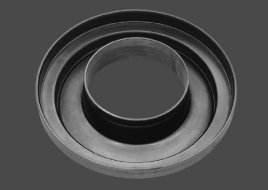
A Deep Drawn stamping is when the depth of the drawn cup exceeds its diameter.
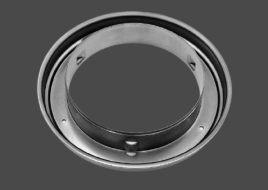
Compound Stampings are often used when medium to low volume stamped parts need to be produced. Compound stamping dies can be made for a lower cost than is required for a complete progressive die.
Our Wire Form and Multi Slide Manufacturing facility was presented with a high volume Consumer Products Wire Form opportunity. Our engineering and quoting team were asked to quote a very difficult wire…

Fill out the form and a Component & Device Sales, Inc. representative will contact you shortly
